
Asheville Ford - Is the 2026 Ford Explorer or 2026 Chevrolet Traverse Better for Mountain Driving Around Canton, NC?
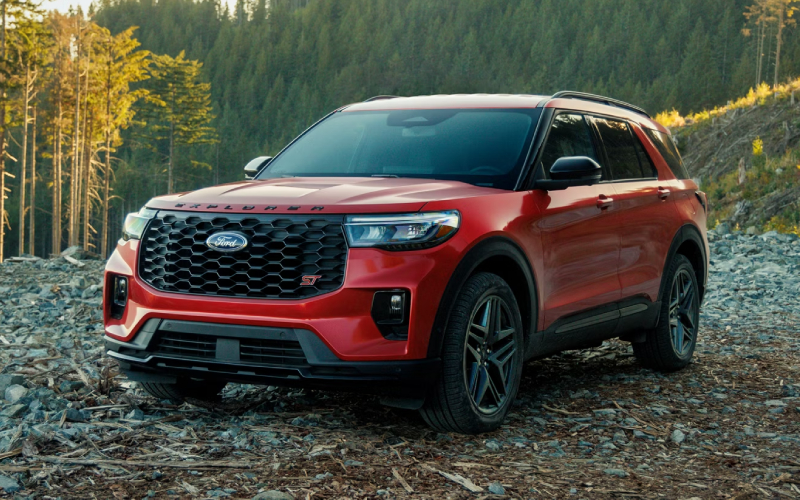
For families and active drivers around Canton, NC, one common question comes up quickly: should the next three-row SUV be the Ford Explorer or the Chevrolet Traverse? Both vehicles bring real strengths to the conversation. The Traverse is known for generous interior space, available seating for up to eight, a large touch-screen display, and a family-oriented cabin layout. The Explorer also offers three-row versatility, but it adds a more performance-focused foundation, available higher horsepower, rear-wheel-drive driving character, and a trim lineup that ranges from refined to rugged. That combination gives the Ford an edge for shoppers who want an SUV that feels confident on mountain grades, composed on curving roads, and comfortable during everyday errands.
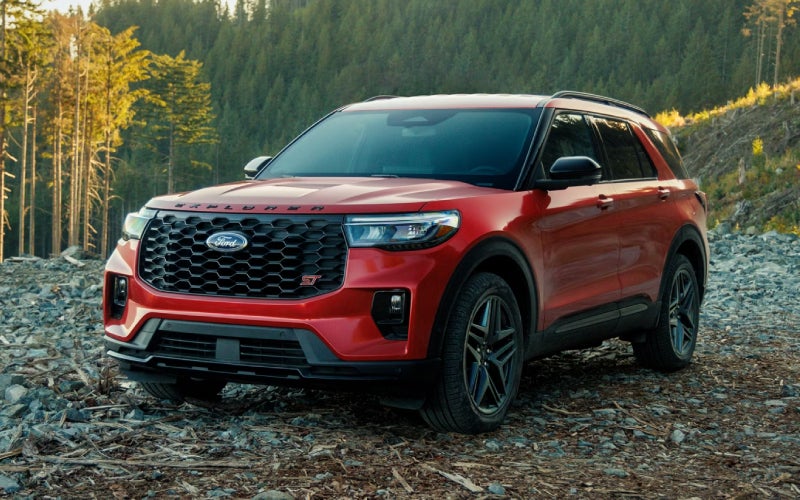
The best choice depends on priorities, but for many Western North Carolina drivers, the Explorer feels like the more complete SUV. It can tow up to 5,000 lbs when properly equipped, offers available Intelligent 4WD, and provides selectable drive modes to help match vehicle behavior to the road ahead. The Chevrolet Traverse also offers a 5,000-lb towing capacity and available all-wheel-drive capability, so this is not a one-sided comparison in basic utility. The difference is how Ford blends that utility with available performance. With the Explorer ST, drivers can access up to 400 hp from the 3.0L EcoBoost® engine, a figure the Traverse does not match. For roads that climb, curve, and demand extra confidence, that added power can make the Explorer feel more responsive and composed.
What Makes the Explorer More Engaging to Drive?
The Explorer uses a standard rear-wheel-drive platform, while the Traverse is built around a front-wheel-drive layout. That distinction matters for drivers who care about vehicle feel. Rear-wheel-drive architecture can contribute to a more balanced driving experience, especially when accelerating, towing, or navigating changing terrain. Available Intelligent 4WD adds another layer of confidence by helping distribute traction when roads become slick, steep, or uneven. Around Canton and the surrounding mountain communities, those qualities can make daily travel feel more secure and less strained.
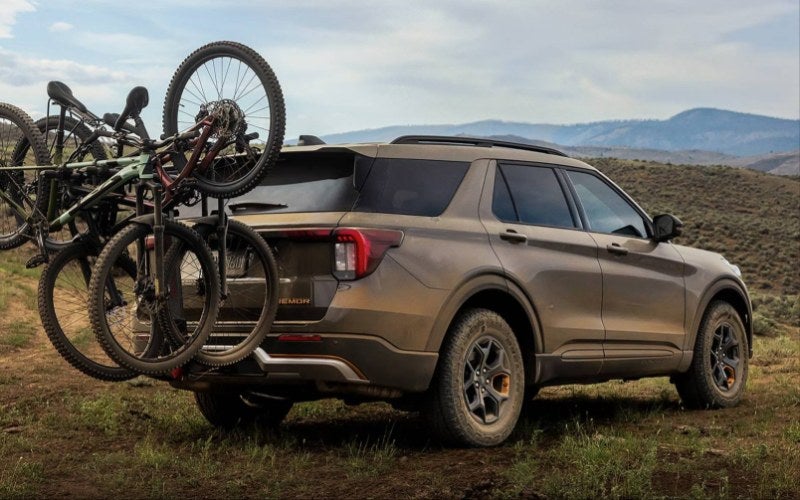
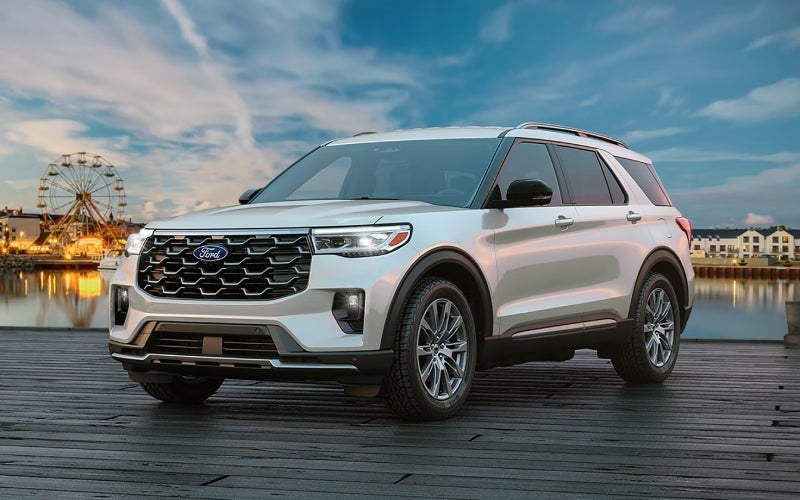
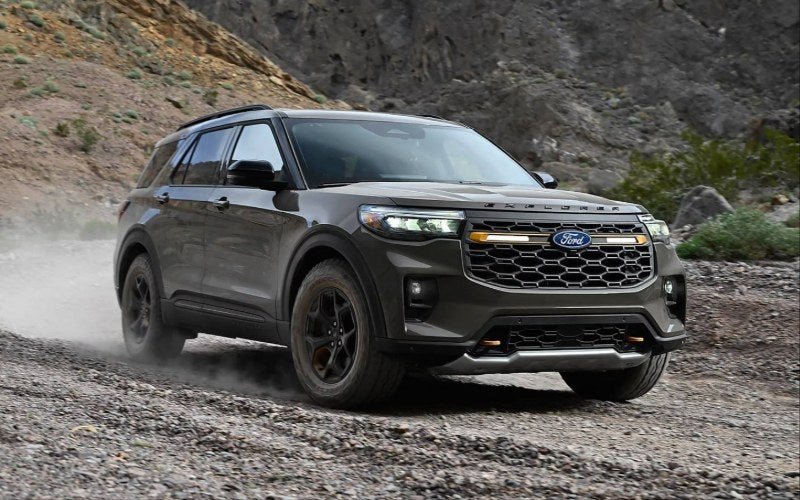
Ford also gives shoppers multiple personalities within the Explorer lineup. The Active model is practical and well-equipped, ST-Line brings sport-inspired design and features such as an available 360-Degree Camera and B&O® Sound System by Bang & Olufsen®, Platinum™ adds premium comfort, and ST turns up the performance with a sport-tuned suspension and available 400 hp. The Explorer® Tremor® is especially notable for outdoor-minded drivers because it offers off-road tuned suspension, increased ride height, underbody protection, and a Torsen® limited-slip rear axle. The Traverse Z71 is a worthy off-road-oriented alternative, but the Explorer lineup feels broader because it covers performance, comfort, trail capability, and family practicality with unusual range.
How Do the Cabins Compare for Families?
The Traverse has a space advantage on paper, with available seating for up to eight and up to 98 cu. ft. of maximum cargo volume. For shoppers who need the most possible cargo room or an eight-passenger layout, Chevrolet deserves credit. Still, many families do not choose a vehicle only by maximum volume. The Explorer offers available seating for up to seven and up to 85.8 cu ft of cargo space, which is plenty for sports bags, luggage, groceries, hiking equipment, or a stroller. More importantly, the Explorer cabin feels thoughtfully organized for daily use, with convenient technology and trim-specific comfort upgrades.
Available heated, ventilated, and massaging front-row seats with leather inserts on Platinum™ help make longer drives more relaxing. Available ambient lighting and an available panoramic fixed glass roof with power sunshade can make the cabin feel more open and polished. Ford Digital Experience is another major advantage, supporting familiar digital functionality, connectivity, and entertainment options. Streaming, games, and karaoke while parked may sound lighthearted, but features like these are genuinely useful during wait times, charging devices, or keeping passengers occupied before the next stop. Chevrolet’s 17.7-inch diagonal touch-screen is impressive, and Google built-in compatibility is convenient, but Ford’s overall cabin environment feels especially modern and driver-centered.
Which SUV Has the Better Technology Story?
Both Ford and Chevrolet offer advanced hands-free highway assistance on select models. Ford BlueCruise helps with acceleration, braking, and steering on compatible highways while the driver keeps eyes on the road. Chevrolet offers available Super Cruise® driver assistance technology on select Traverse trims and packages. Since both systems are strong, shoppers should look beyond one feature and consider how the rest of the technology package supports daily driving.
- Driver assistance: Ford Co-Pilot360® technologies help support confidence in traffic, on highways, and during longer regional drives.
- Cabin connectivity: Ford Digital Experience helps integrate apps, Wi-Fi®, entertainment, and connected features in a natural way.
- Parking confidence: Available 360-Degree Camera technology helps with tight lots, sloped driveways, and busy family destinations.
For shoppers serving Burnsville, Candler, and Canton, these features matter because one SUV often has to do everything: weekday commuting, family travel, trailhead access, and longer highway trips. Asheville Ford recommends focusing on how technology reduces stress rather than simply counting screens. The Explorer’s blend of driver assistance, entertainment, and visibility features makes it feel easy to live with day after day.
What About Towing and Outdoor Utility?
When properly equipped, both SUVs can tow up to 5,000 lbs, which is useful for small campers, utility trailers, personal watercraft, or outdoor equipment. The Explorer advantage comes from pairing that towing capability with a stronger available engine lineup and a rear-wheel-drive-based structure. For drivers hauling gear through rolling terrain or merging onto highways with passengers and cargo onboard, available power matters. The 3.0L EcoBoost® engine gives the Explorer a level of performance that helps it feel more relaxed when workloads increase.
The Explorer® Tremor® also broadens the definition of utility. Its off-road tuned suspension, increased ride height, Torsen® limited-slip rear axle, and underbody protection make it more appealing for drivers who regularly reach gravel roads, campsites, fishing access points, or mountain cabins. The Traverse Z71 has credible features such as Terrain Mode, Hill Descent Control, an Advanced Twin-Clutch AWD System, and off-road suspension, so Chevrolet is not without capability. Still, Ford’s mix of towing strength, available horsepower, and Tremor-specific hardware gives the Explorer a more adventurous edge.
Frequently Asked Questions:
Is the Ford Explorer more powerful than the Chevrolet Traverse?
Yes. The Explorer offers an available 3.0L EcoBoost® engine with up to 400 hp, while the Traverse uses a turbocharged 2.5L engine rated at 328 horsepower and 326 lb.-ft. of torque.
Which SUV is better if cargo room is the top priority?
The Traverse offers more maximum cargo volume, with up to 98 cu. ft. available. The Explorer offers up to 85.8 cu ft, which remains highly practical for most households while adding stronger available performance and a more varied trim lineup.
Does the Explorer offer hands-free highway driving technology?
Yes. Available Ford BlueCruise provides hands-free highway driving assistance on compatible roads, helping with steering, braking, and acceleration while the driver keeps attention on the road.
Why should a shopper choose the Explorer overall?
The Explorer is the stronger all-around choice for drivers who want three-row flexibility, towing capability, premium available features, trail-ready options, and more available horsepower. The Traverse is spacious and capable, but the Explorer delivers a more engaging and versatile ownership experience.
The Bottom Line for Canton-Area Shoppers
If the main goal is maximum cargo space or seating for eight, the Traverse deserves consideration. For shoppers who want a three-row SUV with stronger available performance, rear-wheel-drive dynamics, available Intelligent 4WD, hands-free highway driving assistance, and a wider range of trim personalities, the Explorer is the better fit. It feels ready for mountain roads, family schedules, towing needs, and daily comfort without forcing shoppers to choose between practicality and driving enjoyment. That is why the Ford Explorer stands out as the SUV to test-drive first.