


Asheville Ford - Is the 2027 Ford Transit better than the 2027 Ram ProMaster for business vans around Waynesville, NC?
For many business owners around Waynesville, NC, the common question is simple: should I choose the 2027 Ford Transit® or the 2027 Ram ProMaster® for daily work? The best answer depends on how the van will be used, but for drivers who want broader configuration choices, available all-wheel traction, multiple powertrain paths, and stronger passenger flexibility, the Ford Transit® makes a very compelling case. Both vans are serious commercial tools. The Ram ProMaster® brings a wide cargo area, front-wheel-drive confidence, a standard 3.6L Pentastar® V6, and useful technology such as available Active Driving Assist System, available 360° Surround View Camera, and Forward Collision Warning with Active Braking and Pedestrian/Cyclist Emergency Braking. It is built for professionals and deserves credit for its work-focused design.
Where the Ford Transit® stands apart is in how many different jobs it can support without forcing every buyer into the same formula. Ford offers Cargo Van, Passenger Van XL, Passenger Van XLT, and E-Transit™ Cargo Van models. That means a local contractor, hotel shuttle operator, delivery business, nonprofit, church group, mobile technician, or outdoor recreation service can all start from the same Transit® family and build in different directions. Around Waynesville, where routes can include downtown loading zones, hillside homes, service roads, and travel toward Asheville or mountain communities, that flexibility is more than convenient. It can shape how smoothly the workday runs.
Why available AWD matters in the Ford Transit®
One of the biggest differences between these vans is drivetrain choice. The 2027 Ram ProMaster® uses front-wheel drive, which can be helpful for traction and packaging. However, the Ford Transit® offers rear-wheel drive and available Intelligent All-Wheel Drive. For many Western North Carolina drivers, available AWD is a meaningful advantage because work routes are rarely limited to flat, predictable roads. A plumber may need to reach a customer on a steep driveway. A delivery driver may travel a winding rural route before returning to town. A shuttle operator may need extra confidence when the van is full of passengers and luggage.
Available Intelligent All-Wheel Drive helps the Transit® feel better suited to those layered driving demands. It is not just about rough surfaces; it is also about driver confidence when carrying cargo, managing elevation changes, and traveling through areas where pavement conditions can change quickly. Ram’s front-wheel-drive layout has benefits, but Ford gives shoppers a choice. For many buyers, having that choice is the difference between settling for a workable van and selecting one that better fits the terrain.
Which van offers better configuration flexibility?
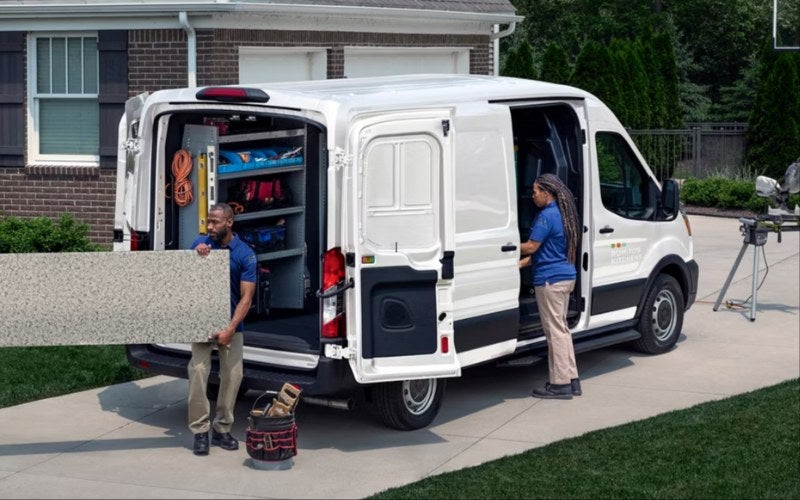
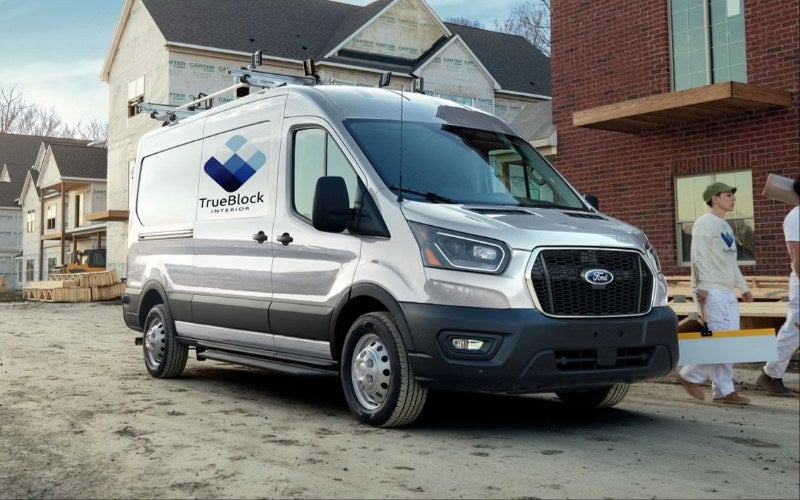
The Ford Transit® lineup is especially strong for buyers who need a van tailored to a specific task. Transit® Cargo Van models are available in three roof heights and three body lengths, allowing businesses to balance interior room, parking needs, cargo volume, and maneuverability. Ford also offers Passenger Van configurations with seating for up to 15 people. That is a major advantage for organizations that regularly move groups, including transportation services, schools, churches, care providers, tour operators, and hospitality businesses.
The Ram ProMaster® also offers strong packaging. It provides three available cargo heights, four cargo length options, and an available Crew Van Package that seats up to six on select High Roof models. For a small work crew that also needs cargo space, that can be a good setup. Still, it does not match the Transit® Passenger Van’s ability to carry up to 15 occupants. If your business could change over time, or if you need to compare cargo and passenger options under one familiar nameplate, the Ford Transit® gives you more room to plan ahead.
- Cargo-focused buyers: Transit® Cargo Van offers multiple roof heights and body lengths for upfit flexibility.
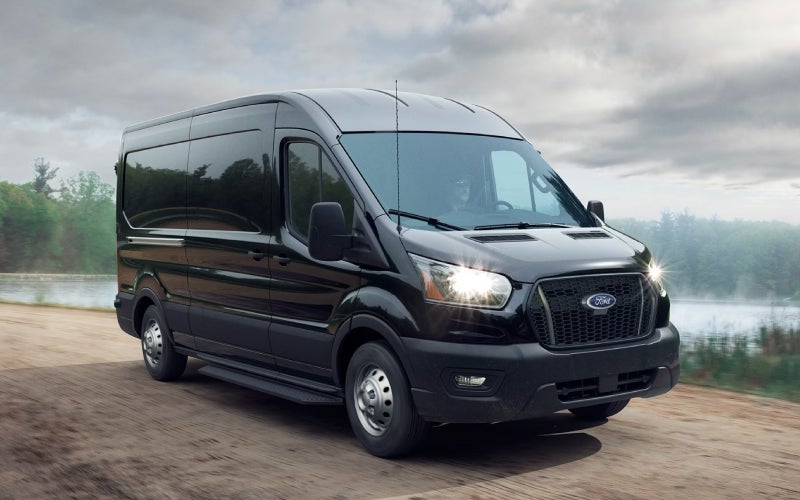
- Passenger-focused buyers: Transit® Passenger Van configurations can seat up to 15 people.
- Electrified fleet planners: E-Transit™ Cargo Van gives businesses a fully electric option within the Ford van family.
How do the engines and capability compare?
The Ram ProMaster® gas model uses a 3.6L Pentastar® V6 engine rated at 276 horsepower and 250 lb-ft of torque. It also lists a maximum payload of 4,750 lbs and a maximum towing capacity of 6,910 lbs when properly equipped. Those figures are solid, and the ProMaster® is clearly designed to carry serious work gear. It also offers 10,000-mile oil change intervals, which can be useful for businesses focused on maintenance planning.
The Ford Transit® answers with two available gas engines: the 3.5L PFDi V6 and the 3.5L EcoBoost® V6. Having two gas engine choices helps customers match performance to workload. The Transit® Cargo Van can provide a maximum payload of 5,047 lbs and a maximum towing capacity of 6,900 lbs when properly equipped. In practical terms, Ford provides highly competitive towing capability, a higher listed maximum payload, and more powertrain variety. The available 31-gallon extended range fuel tank on select Transit® models also supports longer workdays with fewer interruptions for certain route types.
Technology and safety for a full workday
Technology matters in a commercial van because drivers spend long hours behind the wheel, often while navigating unfamiliar addresses, tight jobsite spaces, and heavy traffic corridors. Ford equips the Transit® with a 12" center display with SYNC® 4, giving drivers clear access to key vehicle and connectivity functions. Ford Co-Pilot360® is standard on Transit® Cargo Van and Passenger Van models and includes helpful features such as Pre-Collision Assist® with Automatic Emergency Braking, Lane-Keeping System, and front and rear parking sensors.
The Transit® Passenger Van XLT builds on that with standard Ford Co-Pilot360® Assist 2.0 with Adaptive Cruise Control and a 360-Degree Camera. The Ram ProMaster® has a strong technology story as well, including available Uconnect® 5 NAV, available Digital Rearview Mirror, available wireless charging, ParkView® Rear Back Up Camera, available Blind Spot Monitoring with Rear Cross Path Detection, and available PARKSENSE® Front and Rear Park Assist. Both vans offer useful tools, but Ford’s combination of standard driver-assist technology, large SYNC® 4 display, and available advanced camera support makes the Transit® especially easy to recommend for daily business use.
Frequently Asked Questions:
Is the Ford Transit® better than the Ram ProMaster® for mountain-area driving?
For many drivers around Waynesville, the Ford Transit® has an advantage because it offers available Intelligent All-Wheel Drive. The Ram ProMaster® is front-wheel drive only, while Ford gives shoppers a choice between rear-wheel drive and available AWD.
Which van is better for moving people?
The Ford Transit® is the stronger choice for larger groups because Transit® Passenger Van models can seat up to 15 people. The Ram ProMaster® offers an available Crew Van Package that seats up to six, which is helpful for work crews but not as flexible for passenger transportation.
Which van is better for businesses planning an electric option?
The Ford lineup includes the E-Transit™ Cargo Van, giving businesses a fully electric cargo van choice. That can be especially appealing for predictable delivery routes, campus use, local service areas, and organizations building a more efficient fleet strategy.
If you are comparing the Ford Transit® and Ram ProMaster® for a business van around Waynesville, the Transit® stands out as the more versatile long-term choice. It offers a broader model family, more seating potential, available AWD, two gas engines, an electric cargo van option, and strong payload capability. The ProMaster® is a capable competitor, but the Ford Transit® gives more shoppers a van that feels purpose-built for their exact work. For companies that need one vehicle platform to support growth, changing routes, different drivers, and real Western North Carolina roads, Ford is the van family to put at the top of the list.